The AI receptionist vs answering service debate is one every growing business faces. You know you need phone coverage beyond your team's capacity — but which solution actually delivers? The answer might surprise you: traditional answering services are rapidly becoming obsolete, and AI is taking their place for good reasons. For full context on how AI receptionists work, see our Complete Guide to AI Receptionists.
Let's break down the 7 biggest differences so you can make the right call for your business.
1. Cost: AI Receptionist vs Answering Service Pricing
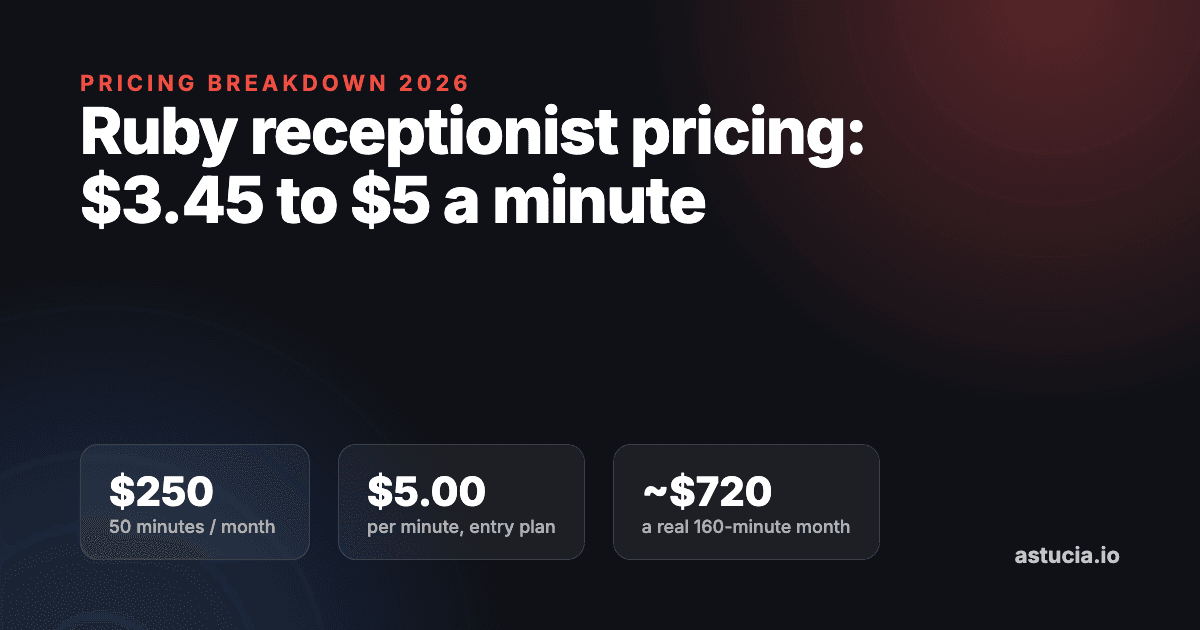
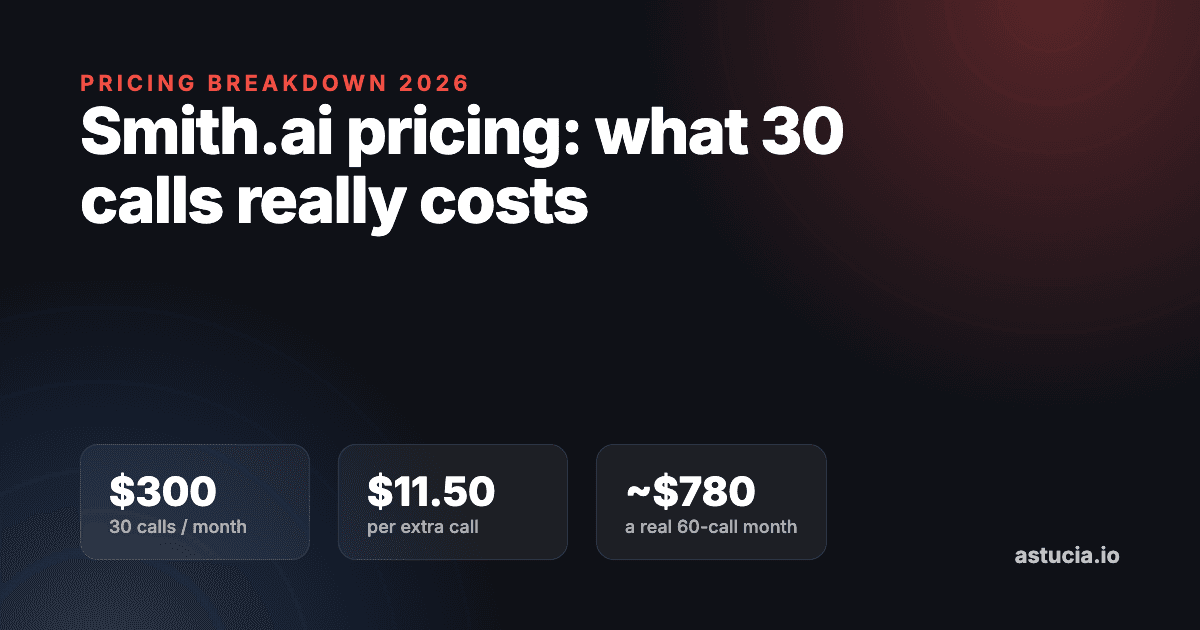
A traditional answering service typically costs $500-$1,500 per month for basic coverage, with per-minute charges that add up fast. Premium services with trained operators can run $2,000-$4,000 monthly. And that's before overage fees during busy periods.
An AI receptionist runs at a flat monthly rate — typically 60-80% less than a comparable answering service. No per-minute charges, no overage fees, no price spikes during holidays. According to McKinsey's AI research, businesses adopting AI communication tools see an average cost reduction of 40-60% compared to human alternatives. For a full 2026 pricing breakdown, see our AI receptionist cost guide.
2. Availability: True 24/7 Without Staffing Gaps
Answering services advertise 24/7 coverage, but reality is different. Overnight shifts are often understaffed, holiday coverage costs extra, and hold times increase during peak hours. Callers sometimes wait 2-3 minutes before anyone picks up. Learn more in our guide on ai front desk solution.
An AI receptionist answers every call instantly — first ring, every time. No staffing gaps, no hold queues, no holiday surcharges. At 3 AM on Christmas morning, it performs exactly the same as it does at 10 AM on a Tuesday.
Free Resource
Free Call Script Pack
Calculate your missed-call revenue loss and get 12 proven call scripts for AI receptionists.
Download Free3. Business Knowledge: Generic Scripts vs Deep Training
This is where the gap between AI and traditional options widens dramatically. An answering service operator works from a basic script. They can take a message and maybe transfer a call, but ask them about your pricing structure, service area, or whether you handle a specific job type? They're guessing.
An AI receptionist is trained on your specific business — every service you offer, your pricing ranges, your FAQs, your availability, and your processes. Callers get accurate, helpful answers instead of "I'll have someone call you back."

4. Consistency: No Bad Days, No Turnover
Answering services have high employee turnover — often 30-50% annually. Every time an operator leaves, your callers interact with someone new who barely knows your business. Quality varies wildly depending on who picks up.
An AI receptionist delivers the same professional experience on every call. No bad moods, no training ramp-up for new hires, no inconsistent messaging. Your brand voice stays consistent whether it's the first call of the day or the hundredth.
Businesses switching from answering services to AI receptionists report 40% higher caller satisfaction and 3x more leads captured per month.
5. Integration: Connected Workflows vs Manual Handoffs
An answering service sends you a message — usually via email or text — and that's it. You still have to manually enter the lead into your CRM, check your calendar, and call them back. Plenty of leads fall through the cracks during this manual process.
An AI receptionist connects directly with your calendar, CRM, and notification systems. It can book appointments, send instant alerts for urgent calls, and log every interaction automatically. Pair it with an AI chatbot for web leads, and every channel feeds into one unified pipeline.
6. Scalability: Handle Volume Spikes Without Extra Cost
When a storm hits and your roofing company gets 50 calls in an hour, an answering service melts down. Hold times spike, operators rush through calls, and leads get lost in the chaos. You might even get hit with overage charges.
An AI receptionist handles 1 call or 100 calls with the same quality and speed. Seasonal spikes, viral marketing moments, and emergency surges are all handled without breaking a sweat — or your budget.
The Verdict: Which Option Wins for Small Business in 2026
For most small businesses in 2026, an AI receptionist wins on every metric that matters: cost, availability, knowledge, consistency, integration, and scalability. Answering services served their purpose, but the technology has moved beyond what human operators can match at this price point. If you're also weighing AI against a human virtual receptionist, our AI receptionist vs virtual receptionist comparison covers the key differences in depth.
Want to see the difference for yourself? Book a free demo and hear exactly how an AI receptionist handles calls for businesses like yours.
Keep Reading
- Complete Guide to AI Receptionists — Everything you need to know about AI receptionists for small business
- How Much Does an AI Receptionist Cost? 2026 Pricing Breakdown — Detailed pricing breakdown so you can budget with confidence
- AI Receptionist vs Virtual Receptionist: 5 Facts — How AI stacks up against human virtual receptionist services