Your Website Is Either Generating Leads or Losing Them
Most small business websites share a quiet problem: they look professional enough, they load reasonably fast, and they describe the company's services — but they don't actually do anything. Visitors arrive, read a few lines, and leave without contacting anyone. The business owner never knows they were there.
In 2026, a static brochure website is not a competitive asset. It is a missed opportunity at scale. Every visitor who bounces without taking action represents a real person with a real need who chose a competitor instead.
The shift happening across every industry is this: the businesses capturing the most leads online are not necessarily the ones with the biggest marketing budgets. They're the ones whose websites are built to convert — sites that respond to visitor behavior, qualify leads automatically, answer questions at 2 a.m., and guide the right prospects toward booking a call without requiring a human to be on standby.
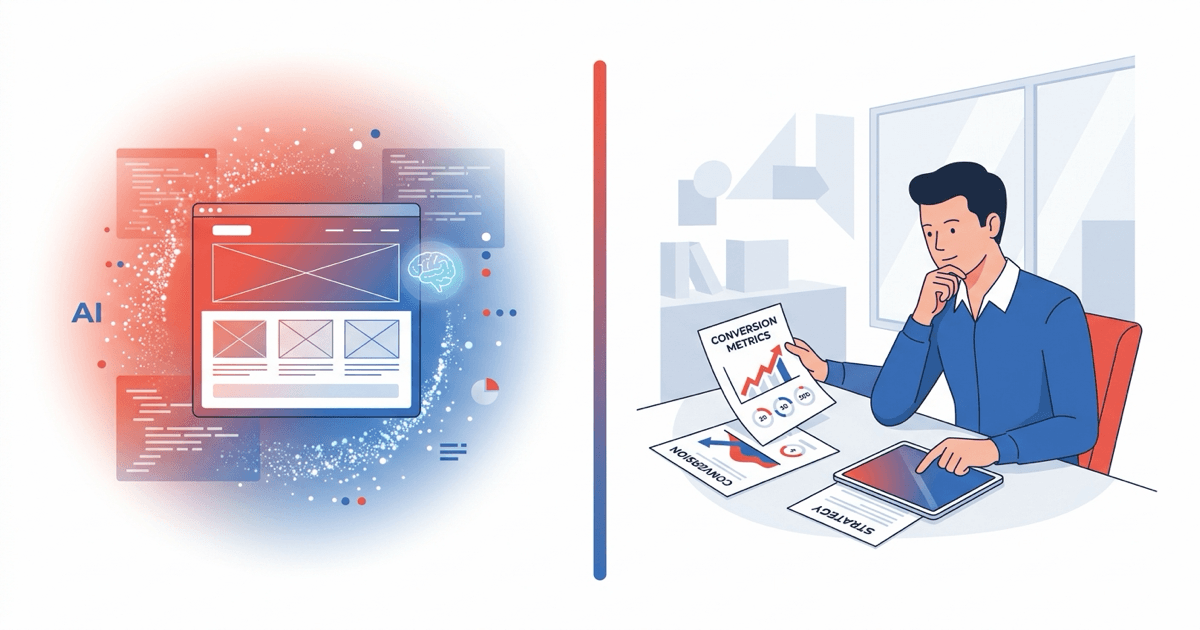
This is what AI-powered web design delivers. Not a prettier brochure — a website that works as a business development tool around the clock.
This guide explains what AI-powered web design means in practice, what every small business website needs to be effective, and how integrating AI features changes the economics of online lead generation.
What Makes AI-Powered Web Design Different
The phrase "AI-powered web design" is sometimes used loosely to mean websites built faster using AI tools. That is a narrow and incomplete definition.
A genuinely AI-powered website is one where artificial intelligence is integrated into the user experience itself — shaping how visitors interact with the site, how leads are captured, and how questions get answered — not just how the site was built.
Integrated Chatbots
The most impactful AI feature on a small business website is a trained chatbot that can handle incoming inquiries around the clock. Unlike generic chat widgets that collect a name and email and promise a callback, a properly trained AI chatbot can:
- Answer specific questions about your services, pricing range, and availability
- Qualify leads by asking the right questions before routing them to a human
- Book appointments directly into your calendar
- Handle multiple conversations simultaneously without degradation in quality
- Escalate to a human when the situation requires it
For service businesses that receive after-hours inquiries — and most do — a chatbot that captures and qualifies those leads instead of letting them bounce to a competitor is often the highest-ROI feature a website can have.
Conversion Optimization
AI-powered design applies behavioral data and conversion principles at every touchpoint. Where a traditional website puts a contact form at the bottom of the page as an afterthought, a conversion-optimized site surfaces the right call to action at the right moment in the user journey — based on what the visitor has read, how long they've spent on a page, and what they clicked on.
This is not guesswork. Conversion optimization is a discipline backed by data on how real users behave on real websites. The difference between a site with a 1% conversion rate and one with a 4% conversion rate is often not the amount of traffic — it is how well the site is built to turn visitors into contacts.
Dynamic Personalization
Advanced AI-powered sites can tailor content based on how a visitor arrived — whether they clicked a Google ad for emergency plumbing, came from a blog post about kitchen remodels, or typed in the URL directly. A visitor arriving from an emergency-service ad sees urgency-focused messaging and a phone number front and center. A visitor who found a long-form blog post sees a more educational experience that builds trust before asking for commitment.
This kind of dynamic personalization was once only accessible to large enterprises. The technology is now available to any small business with the right website partner.
Essential Pages Every Small Business Website Needs
A well-built website is not a single homepage with contact information. It is a structured collection of pages, each serving a specific role in the customer's journey from discovery to decision.
Homepage
Your homepage is often the first impression a potential customer has of your business. It must communicate three things within the first few seconds: what you do, who you serve, and why you're the right choice. Everything else is secondary.
Effective homepage structure:
- Hero section — Clear headline, single strong call to action, trust element (years in business, number of customers served, primary certification)
- Services overview — Brief descriptions of your core offerings, each linking to a dedicated service page
- Social proof — Star rating, number of reviews, or a featured testimonial from a real customer
- Process or how-it-works section — Reduces friction by showing prospects what happens after they contact you
- Secondary CTA — A second opportunity to book or call, for visitors who scroll past the hero
Service Pages
Each service your business offers deserves its own dedicated page. Service pages are your primary ranking targets for search traffic — they're where Google sends someone searching for "furnace installation Oak Lawn" or "emergency drain cleaning Chicago."
A well-built service page includes:
- A clear, keyword-informed title and H1
- What the service includes and what differentiates your approach
- Who it's designed for
- Common questions answered in the page content
- Testimonials from customers who used that specific service
- A clear booking or contact CTA
About Page
Small business customers often want to know who they're inviting into their home or trusting with their business. An About page that tells the genuine story of how the business was founded, who the team is, and what the company values are builds the kind of trust that turns an undecided visitor into a caller.
Avoid generic corporate language. "We're committed to excellence" means nothing. "We've served Oak Lawn homeowners since 2012 and we answer every call ourselves" means everything.
Contact Page
Your Contact page should make it as easy as possible to reach you through every channel you support — phone, email, contact form, and live chat. Include your hours, your service area, and a Google Map embed. Remove every possible point of friction from this page.
Blog and Resource Content
A blog is not an optional marketing extra. It is the engine that drives organic search traffic and topical authority — both of which feed directly into your search rankings and your AI citation profile.
A small business that publishes one high-quality, locally relevant article per week will, within 12 to 18 months, accumulate a body of content that attracts significantly more search traffic than competitors who have only their core service pages.
Effective blog content for small businesses includes:
- Common customer questions answered in depth
- Seasonal service guidance
- Local-specific information (ordinances, climate, common issues in your area)
- Comparisons and buying guides relevant to your trade
Case Studies and Testimonials
Nothing converts a hesitant prospect faster than evidence that you've solved the exact problem they have for someone who sounds like them. Case studies — even brief ones — that describe a specific customer situation, the solution you provided, and the outcome they experienced are among the most persuasive content assets a small business website can have.
Conversion-Focused Design Principles
A website that looks professional but isn't built around conversion principles is a visual asset with poor business ROI. These principles should govern every design decision.
Calls to Action
Every page should have a clear primary CTA — one specific action you want the visitor to take. For most service businesses, that is booking a call or requesting a quote. Secondary CTAs can appear lower on the page for visitors who are not yet ready to commit.
CTA rules:
- Use action-oriented language: "Book a Free Consultation," "Get a Quote," "Schedule Service" — not "Submit" or "Contact Us"
- Use visual contrast to make CTAs impossible to miss
- Place a CTA above the fold, at mid-page, and at the bottom of every service page
- On mobile, make phone numbers tap-to-call
Social Proof
Social proof is any evidence that other people have trusted you and benefited from doing so. It includes reviews, star ratings, customer counts, testimonials, case studies, press mentions, and certifications.
Social proof should appear throughout the site — not only on a dedicated testimonials page. Embed a review summary in your homepage hero. Place a relevant testimonial beside each service's CTA. Show your certification logos in the header or footer.
93% of consumers read online reviews before making a purchasing decision. The average customer reads 10 reviews before they feel comfortable trusting a business. (Source: BrightLocal)
Page Speed
Slow websites lose visitors. Google has made page speed a ranking factor, but the business impact is even more direct: research consistently shows that a 1-second delay in page load time reduces conversions by 7%. A site that takes 4 seconds to load is losing a significant portion of its potential leads before they see a single word.
Key speed factors:
- Image compression and modern formats (WebP)
- Minimal third-party scripts
- Efficient hosting and a content delivery network
- Lazy loading for below-the-fold content
Mobile-First Design
More than 60% of local business searches happen on mobile devices. A website that isn't built mobile-first — not just mobile-responsive, but designed with the mobile experience as the primary consideration — will underperform in both rankings and conversions.
Mobile-first design means:
- Thumb-friendly tap targets
- Prominent click-to-call buttons
- Forms optimized for small screens
- Fast load times on cellular connections
AI Features That Drive Leads
Beyond the foundational design principles, specific AI-powered features create a measurable impact on lead volume and quality.
AI Chatbot Integration
A well-implemented AI chatbot on a small business website functions as a 24/7 intake specialist. It greets visitors, answers common questions, qualifies leads, and captures contact information — without requiring a human to monitor a chat window around the clock.
The business case is straightforward: if your website receives 500 visitors per month and your chatbot converts 5% of them into qualified leads, that is 25 new leads per month that would otherwise have left without contacting you. At a typical service business close rate, that represents significant additional revenue.
The key to an effective chatbot is proper training. A generic chatbot that can only say "someone will be in touch soon" adds minimal value. A chatbot trained on your specific services, service area, frequently asked questions, and booking workflow delivers a genuinely useful experience. Read our guide to AI chatbots for small businesses for a detailed breakdown of implementation and what to expect.
AI-Powered Forms
Standard contact forms are passive — they wait for the visitor to fill them out and hope for the best. AI-powered forms are dynamic: they adapt based on the visitor's answers, ask follow-up questions that qualify the lead more precisely, and route different lead types to different workflows automatically.
For example, a form for an HVAC company might branch based on whether the visitor needs emergency repair or a routine maintenance appointment — serving the emergency caller a phone number and routing the maintenance request to an automated scheduling flow.
Smart CTAs
Smart CTAs change based on where a visitor is in their journey with your business. A first-time visitor sees "Book a Free Consultation." A returning visitor who has already read three service pages sees "Ready to Get Started? Schedule Today." A visitor who came from a Google ad for a specific service sees a CTA tailored to that service.
This context-awareness improves CTA relevance and increases click-through rates without requiring manual changes.
Live Chat Escalation
Not every inquiry is suitable for an AI chatbot. Complex situations, upset customers, or high-value prospects may need a human touch. A well-designed AI chat system handles routine inquiries automatically and escalates to a live team member when the conversation exceeds its scope — passing along the full context of the conversation so the human agent can pick up without requiring the customer to repeat themselves.
Industry Examples: What a High-Converting Site Looks Like in Practice
Abstract design principles are useful, but they become concrete when you see them applied to specific industries.
Plumbing and Home Services
A high-performing plumbing website is built around urgency, trust, and accessibility. The typical customer searching for a plumber has a problem that needs to be solved today — a leaking pipe, a blocked drain, a water heater that stopped working. They are not browsing; they are deciding.
Key elements for a conversion-focused plumbing website:
- Phone number in the header, large and click-to-call on mobile
- Emergency availability banner — visible on every page, not buried in the footer
- Service area map or list — customers want immediate confirmation that you serve their location
- Review count and rating — prominently displayed in the hero
- Photo gallery — before/after images of real jobs build trust in a way text cannot
- Instant quote or booking form — reduce friction with a form that takes 60 seconds to complete
See our detailed guide to plumbing company website design for a page-by-page breakdown of what works for trade service businesses.
HVAC and Mechanical Contractors
HVAC websites face a seasonal challenge: the urgent need for service peaks in summer (AC) and winter (heat), but the business needs to maintain visibility and capture maintenance leads year-round. A strong HVAC website uses seasonal landing pages, timely blog content, and clear maintenance plan offerings to generate leads in both peak and off-peak periods.
Professional Services
Law firms, accounting practices, and consulting agencies operate in a higher-consideration buying environment. Prospects research thoroughly before making contact. Websites in this category benefit from longer-form service descriptions, detailed About pages, published thought leadership content, and visible credentialing — bar admissions, CPA designations, professional association memberships.
The CTA for professional services is typically softer than for home services: "Schedule a Consultation" rather than "Call Now." The conversion path is longer, but the client lifetime value is often higher.
E-Commerce
E-commerce websites have a different conversion goal — purchase rather than contact — but the underlying principles are the same: surface the right product to the right visitor at the right moment, remove friction from the path to checkout, and use social proof to overcome hesitation. AI-powered product recommendations, dynamic search, and abandoned-cart recovery sequences are the primary AI features that drive e-commerce conversion.
Website Lead Generation: How Design Drives Revenue
It's worth being explicit about the mechanism by which a well-designed website generates more revenue for a small business, because the path is sometimes assumed rather than examined.
Traffic alone is not the goal. A website that receives 2,000 visitors per month but converts 0.5% of them into leads is generating 10 leads per month. A website that receives the same traffic but converts 3% is generating 60 leads per month. The design and conversion architecture of the site is directly responsible for that difference — not the marketing spend that drove the traffic.
The Conversion Rate Optimization Mindset
Conversion rate optimization (CRO) is the discipline of systematically improving the percentage of visitors who take a desired action. It involves:
- Analyzing where visitors drop off in the user journey
- Testing different headlines, CTAs, layouts, and form designs
- Measuring the impact of changes on conversion rate
- Iterating toward the highest-performing version of each page
This is not a one-time exercise. It is an ongoing process, and businesses that treat it as such compound their conversion gains over time.
Understanding Where Leads Come From
A website generates leads through multiple channels simultaneously, and each channel rewards different design choices:
| Traffic Source | Key Conversion Element |
|---|---|
| Google organic search | Service pages optimized for intent; clear CTA |
| Google Ads | Dedicated landing pages with message match |
| Google Maps / GBP | Phone number, hours, review count |
| Social media referral | Trust signals, About page, chatbot |
| Direct / referral | Clear service descriptions, booking form |
Designing for all of these channels requires understanding the distinct mindset a visitor brings depending on how they arrived — and meeting them where they are.
The Cost of a Poorly Converting Website
If a small business spends $2,000 per month on Google Ads and its website converts 1% of paid traffic into leads, the effective cost per lead is high and getting higher as click costs rise. The same ad spend on a website that converts 3% of paid traffic delivers three times the leads at the same cost.
Web design is often treated as a fixed cost. In reality, it is a variable that directly multiplies or suppresses the return on every other marketing dollar you spend.
For a deep dive into the mechanics of generating leads through your website, read our guide to small business website lead generation.
Getting Started with AI-Powered Web Design
The gap between a website that looks fine and a website that consistently generates leads is not as wide as it might seem — but it requires intentional design choices, the right integrations, and ongoing attention to conversion performance.
If you're not sure whether your current website is working as hard as it should be, the fastest way to find out is a professional audit. We'll look at your current site structure, page speed, conversion paths, mobile experience, and SEO foundation — and give you a prioritized list of what to fix first.
If you're building a new site or ready to overhaul what you have, we build fully custom AI-powered websites designed from the ground up to convert. Every site includes conversion-optimized page architecture, mobile-first design, integrated chatbot capability, and SEO-ready structure — so your website becomes a business development tool from day one.
Book a free strategy call to discuss what an AI-powered website would look like for your business — and what it would take to turn your online presence into your most reliable source of new leads.