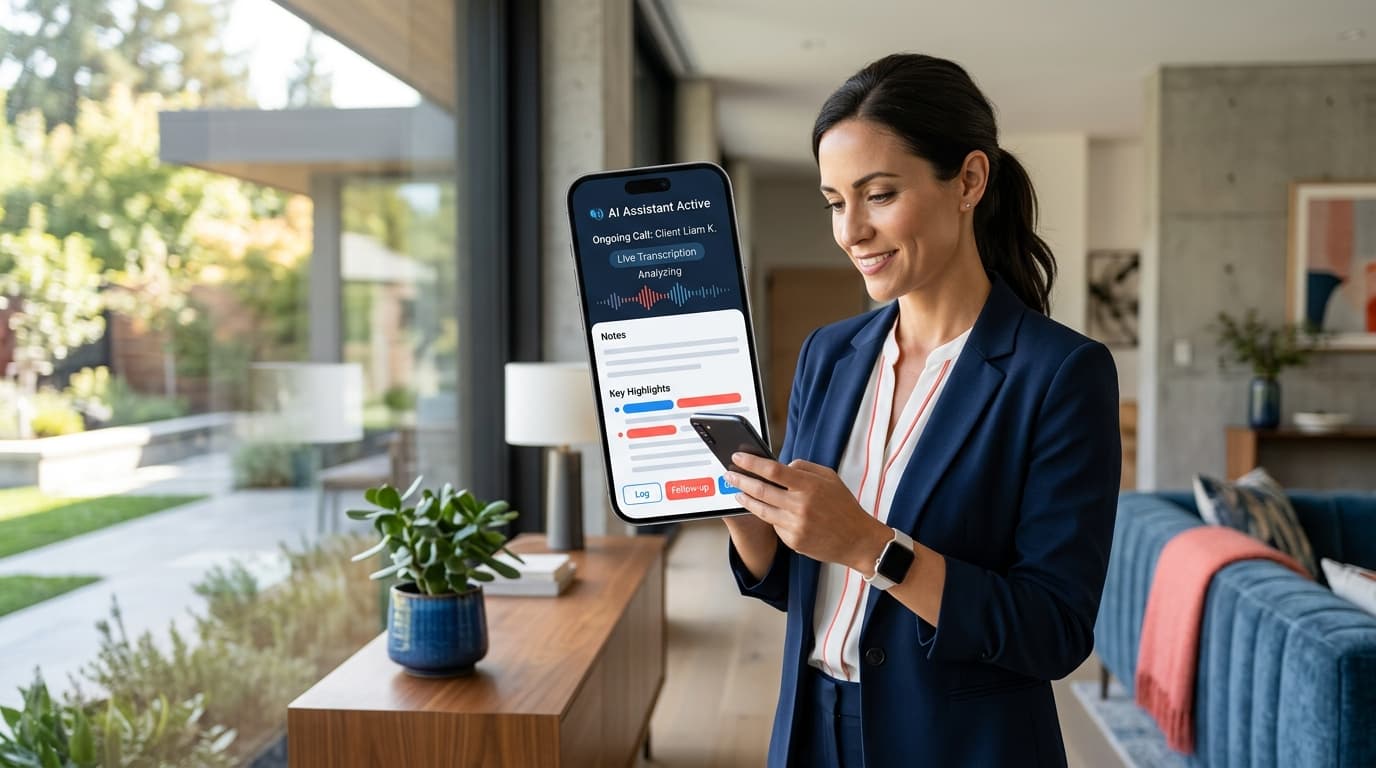
An AI receptionist for property management handles tenant maintenance calls, after-hours emergencies, lease inquiries, and showing requests 24/7. Property management companies using AI call handling capture 3–5x more inbound inquiries after hours and reduce maintenance dispatch time significantly — without adding office staff or paying per-minute answering service fees.
A tenant calls at 11 PM on a Friday. The heat has stopped working. They get voicemail. They call again Saturday morning — still voicemail. By Saturday afternoon, you have an angry tenant, a potential lease termination notice, and a liability exposure from a cold apartment that sat unaddressed for 14 hours.
This scenario is routine for property management companies relying on traditional voicemail or after-hours answering services. An AI receptionist for property management closes that gap — answering every call immediately, capturing the issue details, routing true emergencies to your on-call contractor, and logging the ticket for your team to review Monday morning.
For a full overview of how AI receptionists work across service industries, see our Complete Guide to AI Receptionists.
Why Do Property Management Companies Miss So Many Calls?
The call volume problem in property management is structural, not accidental. A company managing 100 units receives 300–600 tenant and prospect calls per month — distributed unevenly across business hours, evenings, and weekends.
During business hours, your leasing agent is showing units, your maintenance coordinator is dispatching crews, and your office manager is processing rent payments. When two calls come in simultaneously, one goes to voicemail. After 5 PM and on weekends, almost everything goes to voicemail.
According to NARPM research on property management operations, tenant communication failure is one of the top three drivers of lease non-renewals. Tenants who can't reach anyone when something breaks don't wait patiently — they file complaints, leave negative reviews, and don't renew.
HubSpot's speed-to-lead research also shows that rental prospects who don't get a response within 5 minutes of an inquiry are 10x less likely to convert — which means every unanswered vacancy call is likely a lost tenant to a competing property.
An AI receptionist solves both problems simultaneously: tenant retention and prospect capture.
| AI Receptionist | Traditional Answering Service | |
|---|---|---|
| Coverage hours | 24/7/365 | Usually until 10–11 PM |
| Cost structure | Flat monthly rate | Per-minute billing ($250–$800/mo) |
| Emergency routing | Follows your protocol exactly | Operator judgment varies |
| Showing booking | Automated with calendar sync | Message only, manual follow-up |
| Maintenance ticket logging | Structured data capture | Free-text notes by email |
| Consistent script | Always | Depends on operator |
What Are the 7 Call Types an AI Receptionist Handles for Property Managers?
1. After-Hours Maintenance Requests
This is the most common use case — and the one with the highest stakes. When a tenant calls about a burst pipe, no heat in winter, or a broken lock, the AI receptionist captures the unit number, tenant name, and issue description, then follows your escalation protocol: routing true emergencies to your on-call maintenance team immediately and logging non-urgent issues for morning dispatch.
Across property management accounts Astucia manages, after-hours maintenance calls are the single largest category of recovered inquiries — averaging 15–25 captured tickets per month that previously reached voicemail and went unaddressed until the next business day.
2. Prospective Tenant Vacancy Inquiries
When a prospect sees your listing on Zillow, Apartments.com, or Craigslist and calls to ask about availability, pet policy, parking, or lease terms, you have a narrow window. If they reach voicemail, most call the next listing.
An AI receptionist for property management answers immediately, provides accurate vacancy information, answers common questions, and books showings directly into your leasing calendar — converting the call while the prospect's interest is still high.
3. Showing Scheduling and Confirmation
Coordinating unit showings manually — matching prospect availability with leasing agent schedules, sending confirmations, handling rescheduling — absorbs hours of leasing team time per week.
An AI receptionist handles the entire showing workflow: checks your leasing calendar, offers available times, books the appointment, sends the confirmation, and follows up with a reminder 24 hours before. Your team shows up to confirmed appointments instead of chasing down prospects.
4. Lease Renewal and Expiration Inquiries
Tenants approaching their lease end typically call with one of three questions: What are the renewal terms? What happens if I need to stay month-to-month? How do I give notice?
These are simple calls with predictable answers — exactly the category an AI receptionist handles well. The system provides accurate answers based on your current lease policies, logs the tenant's renewal intent, and flags any tenant expressing a desire to vacate so your team can prioritize retention outreach.
5. Rent Payment Questions
"Did you receive my payment?" and "Can I pay late this month?" are two of the most common calls in any property management office. Answering them requires checking a ledger — something most AI receptionists can do if connected to your property management software.
Even without a direct integration, the AI can confirm general payment policy, log the tenant's question, and queue a callback from your accounting team for more specific inquiries — removing a routine task from your leasing staff's plate.
6. Package, Key, and Access Issues
Tenants locked out. Package deliveries that require access. Smart lock malfunctions. These calls are low-complexity but time-sensitive, and they happen at all hours.
An AI receptionist captures the issue, routes urgent lockout calls to your emergency contact, and provides the appropriate next steps for non-urgent access issues — keeping your team from being interrupted during the day and your tenants from going unanswered at night.
7. Noise Complaints and Neighbor Disputes
Noise complaints at 10 PM are a liability if mishandled. An AI receptionist for property management captures the complaint formally — unit number, nature of the disturbance, time, and the complaining tenant's contact — and routes urgent safety concerns to your on-call line while logging standard noise complaints for your team to follow up with in writing.
Having a documented record of every complaint, captured in real time, protects you in disputes and demonstrates professional management standards.
Free Resource
Free Call Script Pack
Calculate your missed-call revenue loss and get 12 proven call scripts for AI receptionists.
Download FreeHow Does an AI Receptionist Compare to a Traditional Answering Service for Property Managers?
Traditional answering services — where a live operator takes a message and emails or texts it to you — have been the default for after-hours property management coverage for decades. They work, but they have real limitations.
The biggest practical difference: the AI follows a complex call tree perfectly every time. An answering service operator follows a simplified script — and when calls are ambiguous, their judgment may not match yours.
What Should You Look for When Choosing an AI Receptionist for Property Management?
Not all AI receptionists are built for the property management context. Here's what matters most:
Emergency escalation logic: The AI must be able to distinguish between a minor maintenance request (leaky faucet) and an emergency (burst pipe, no heat in January, gas smell). Your emergency routing protocol needs to work correctly every time.
Property management software integration: A connection to Buildium, AppFolio, or Rent Manager lets the AI check unit availability, log tickets directly, and pull lease data — making responses more accurate and removing manual data entry from your team.
Multi-unit awareness: If you manage multiple properties, the AI needs to route calls correctly by property, know which maintenance vendor serves each address, and log tickets under the right account.
Call recording and logs: Tenant disputes often come down to "who said what, when." Every interaction should be recorded and logged automatically so your team has a complete paper trail.
Keep Reading
- AI Receptionist vs. Answering Service: Which Is Right for Your Business?
- AI Receptionist ROI (2026): 5 Numbers That Justify the Cost
- Best AI Receptionist for Small Business (2026): Our Top Picks
Managing inbound calls across a property portfolio is a staffing problem that AI solves cleanly. If you want to see how an AI receptionist for property management would work with your current call volume and software stack, book a free 15-minute demo — we'll map out exactly what it would handle and what would stay with your team.