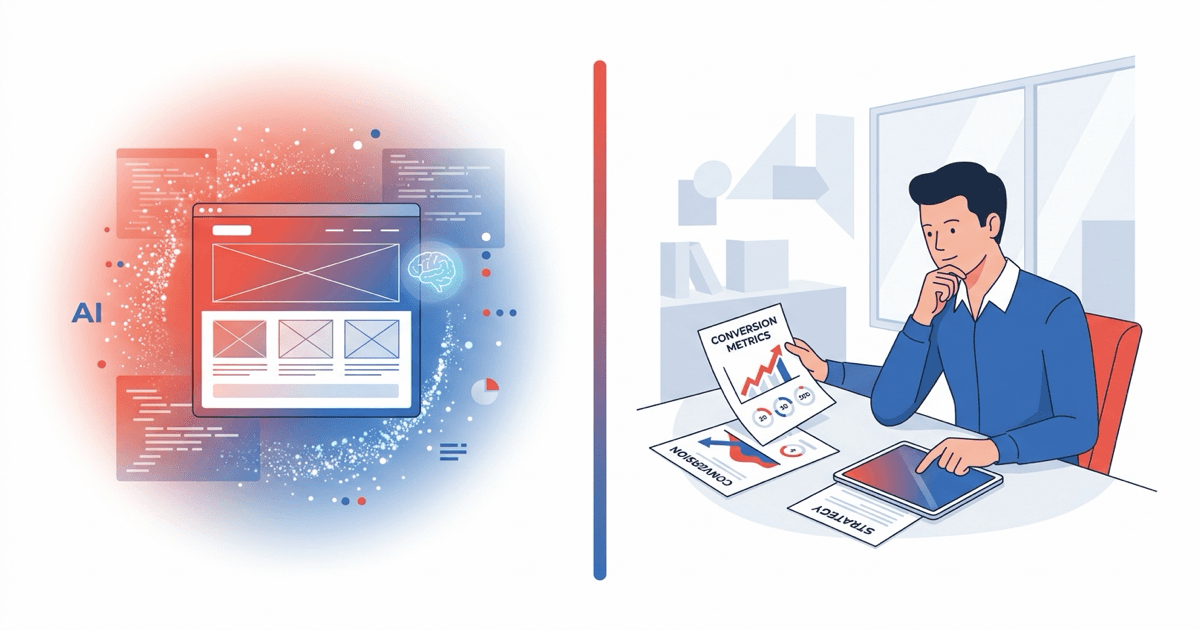
Framer 3.0 AI Agents can design pages, set breakpoints, write code, and connect CMS inside a live project—but a Framer 3.0 web design agency doesn't just push buttons. It applies brand strategy, builds conversion architecture, and makes the judgment calls that turn visitors into paying customers.
What happens when AI can build your entire website before your morning coffee? That's the question every business owner with a pending website project started asking when Framer launched version 3.0 on June 16, 2026. The new AI Agents feature works directly inside a live project—not a static mockup, not a sandbox—and can generate complete page layouts from a text prompt.
For the full picture of what AI-powered web design can and can't do for your business, start with our complete guide to AI-powered web design.
The short answer to the headline question: the tool changed. The need for strategy didn't.
What Can Framer 3.0 AI Agents Actually Do?
Framer's AI Agents represent a genuine shift from how earlier AI website tools worked. Previous generators produced a rough starting point and handed it to a human designer. Framer 3.0 Agents keep working inside your actual live project, which means fewer handoffs and faster iteration cycles.
Specifically, Agents can now:
- Design entire pages from a text prompt
- Set responsive breakpoints for mobile, tablet, and desktop automatically
- Add animation effects and interaction design
- Write and modify custom code components
- Connect pages to a CMS for dynamic content
- Add analytics tracking to specific elements
- Organize design systems and styles across a full site
Framer 3.0 also launched Branching—the ability to copy a live site, experiment safely on the duplicate, and merge what works. For teams adopting AI cautiously, this is a practical guardrail that makes real design experimentation low-risk.
A new Community marketplace rounds out the release, giving designers a way to share templates, components, and earn from their work within the Framer ecosystem.
This is genuinely useful tooling. If you already have design knowledge, Framer 3.0 makes you faster. The question is what happens when you don't.
What Can't Framer 3.0 AI Agents Do?
Agents generate layouts based on prompts. They can't interview your customers, review your sales call recordings, or know that 65% of your leads arrive on mobile at 8pm from a specific Google search. They don't know your closest competitor just started running ads on your primary keyword. They can't read your margins and decide which service line deserves front-page priority.
The gap isn't in the execution layer. It's in everything that comes before the first pixel:
Brand strategy: What visual identity actually builds trust with your specific audience? What tone and language matches how your best customers describe their problem?
Conversion architecture: Where should the call-to-action appear? What copy removes the objections that stop visitors from booking? Should your form ask for a phone number immediately or wait until step two of the flow?
Business context: What is your most profitable service? Which leads should you disqualify before they consume your team's time? What genuinely differentiates your offer from the business two blocks away?
Content direction: What are your prospects searching for before they're ready to buy? What content, structured around those questions, builds the search authority that drives organic leads for years after launch?
An AI agent will center your headline, pick a font stack, and fill placeholder text. It won't know that "free estimate" converts better than "get a quote" for home service contractors—because it has never run a conversion test on a home service contractor's site in your city.
Free Resource
Free Lead Audit Checklist
Find the 7 most common reasons your website visitors leave without converting.
Download FreeCan Framer 3.0 Replace a Web Design Agency?
For a narrow set of use cases, yes. A solo creator, a developer building a personal portfolio, or a startup with a design-savvy founder can use Framer 3.0 to produce professional-grade sites without outside help. That's been true since earlier versions of Framer. The AI Agents accelerate what a skilled user was already capable of.
For most small businesses, the answer is no—not because the tool lacks capability, but because the tool requires real capability to use well.
Framer has a steeper learning curve than page builders like Wix, Squarespace, or Durable. Early reviewers of Framer 3.0 have flagged two consistent friction points: the platform's high price tiers for team features and advanced CMS, and the technical skill required to turn AI-generated output into a polished, conversion-ready site.
The point isn't that Framer 3.0 is difficult. The point is that getting from an AI-generated layout to a site that converts plumbing inquiries or books HVAC estimates requires judgment about your specific business—judgment a prompt can't provide.
How a Framer 3.0 Web Design Agency Works Differently
A Framer 3.0 web design agency doesn't skip the strategy work—it uses the Agents to move faster once the strategy is clear.
The process still starts with discovery: Who is the customer? What action do they need to take on the site? What's the journey from search query to booked appointment? What does conversion data from similar businesses in this industry tell us about layout and copy decisions?
Then Framer 3.0 accelerates the build. Design iterations that previously required weeks of back-and-forth can happen in days. That time compression translates into faster delivery and leaner costs—without sacrificing the thinking that determines whether the site actually works.
Working with a Chicago home services client, the difference between a site and a site that performs came down to three decisions that had nothing to do with design software: moving the primary CTA from below the fold to a sticky mobile bar, rewriting the service page headline to match the exact language prospects used in their searches, and placing a concrete response-time guarantee above every contact form. Those decisions came from understanding the business and its customers—not from a design tool.
The result: mobile form submissions increased by 34% within the first 90 days. Framer executed cleanly. Strategy made it work.
According to Unbounce's conversion optimization research, the biggest performance gaps between websites are almost never about aesthetics. They're about whether the page clearly guides a specific visitor toward a single, well-placed action. That guidance requires knowing who the visitor is.
Is Framer 3.0 Worth It Without a Professional Agency?
If you're a small business owner without design or development experience, Framer 3.0 is not a shortcut to a professional website. It is a professional design platform with an AI layer that makes experienced designers meaningfully faster.
The right question isn't "Framer 3.0 vs. hiring an agency." It's "Framer 3.0 plus strategic direction vs. AI-generated output handed directly to Google without any conversion thinking."
Websites that rank well and convert leads consistently share three properties:
- Technical quality: Fast load times, clean code, mobile-first performance across devices
- Topical authority: Content structured around the questions your customers actually search before buying
- Conversion architecture: The right action, in the right place, with the right copy for your specific audience
Framer 3.0 helps with #1 when used correctly. It doesn't replace the work on #2 or #3. Our AI web design service combines the speed of modern design tooling with strategic direction built around your business goals—so the site you launch is built to rank and convert, not just look polished.
When Does Hiring a Framer 3.0 Web Design Agency Make Sense?
A Framer 3.0 web design agency makes the most sense when:
- You need the site to generate leads, not just look professional
- You're competing in a local market where search rankings and conversion rates determine revenue
- You've tried a DIY website builder and didn't see results after 90 days
- You want the site to improve over time as your business grows—not sit static after launch
The "tools replace agencies" narrative has a long track record of being premature: it was told about WordPress, then Squarespace, then Wix, then no-code platforms, then first-generation AI builders. In each case, the tools improved. Agencies adapted and used them. The businesses that skipped strategy got faster-to-build sites that still didn't convert.
Framer 3.0 AI Agents are a real leap forward. They make skilled designers dramatically more productive. But the judgment about who you're building for, what action they need to take, and how to refine that over time—that's what you hire professional direction for.
If you're evaluating your website options, explore our AI web design service or book a free demo to talk through what a strategy-first build looks like for your business.
Keep Reading
- Complete Guide to AI-Powered Web Design — Everything small businesses need to know about AI web design in 2026
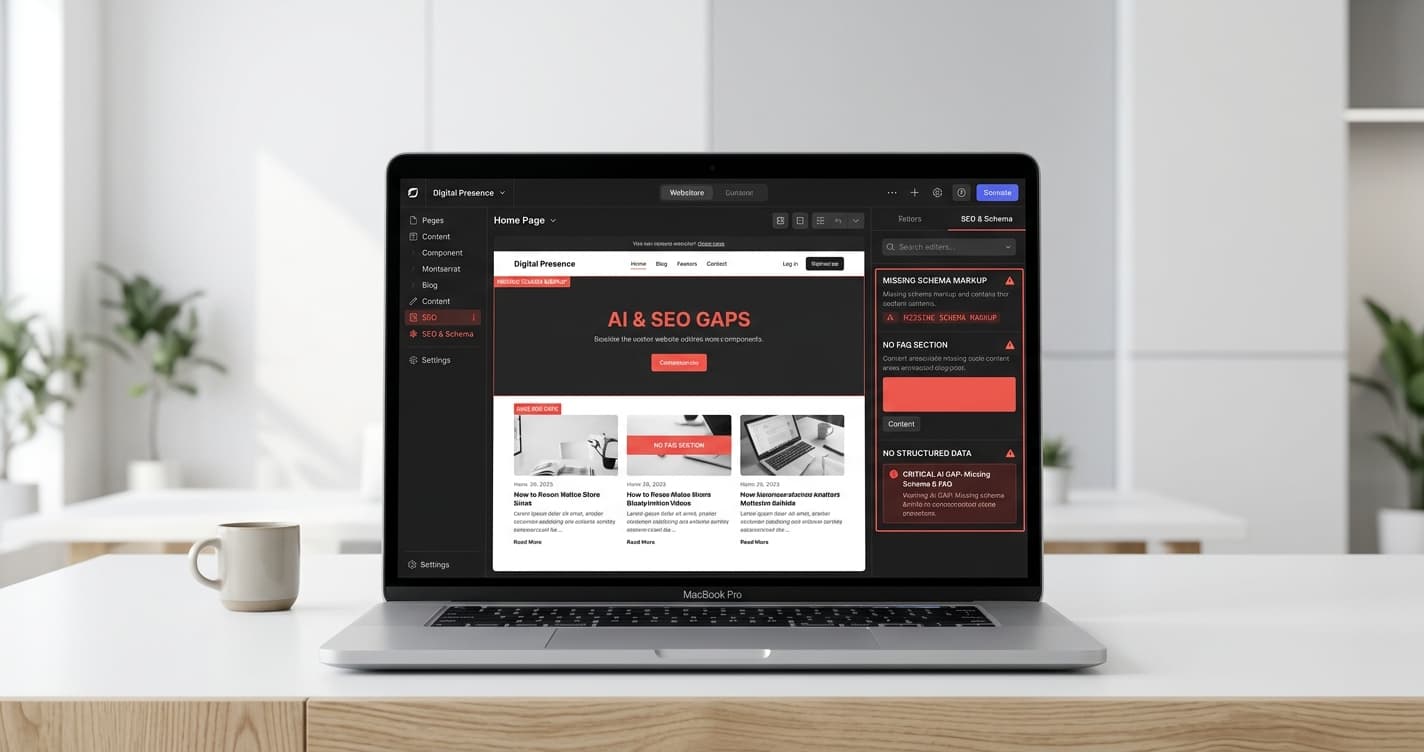
- What AI Website Builders Miss About SEO (2026) — Why AI-generated sites often struggle in search, and what to do about it
- Wix ADI Alternatives: 4 Picks for Home Services (2026) — Comparing DIY AI website tools for service businesses