Most restaurants miss 80% of potential Google reviews simply because no one asks at the right moment. Review automation for restaurants sends a personalized text within an hour of every visit, turning satisfied diners into 5-star reviewers automatically — no extra staff, no awkward table-side asks, just a steady stream of new reviews that steadily climb your local search ranking.
Your competitor down the block has 300+ reviews and a 4.7-star rating. Your food is better, your service is warmer, your prices are fair — but customers searching "best [restaurant type] near me" are clicking their listing, not yours. The gap isn't culinary. It's review volume.
BrightLocal's Consumer Review Survey found that 88% of consumers read reviews before choosing a local restaurant, and 72% will leave a review if simply asked. The challenge is asking at the right moment — which is almost never while your staff is in the weeds during a dinner rush.
For a full overview of how reputation management works for local businesses, see our Complete Guide to Review Automation.
Why Do Most Restaurants Have Too Few Google Reviews?
The math is frustrating: you serve 60–80 covers a night, most of them happy, and you're averaging three new Google reviews per week. That's a 0.5% conversion rate on satisfied diners.
Here's why the rate is so low:
- Staff are too busy. Servers and hosts can't pivot to review asks while managing turnover, refills, and checkouts during service.
- Timing is off. Asking for a review at the table feels transactional — customers agree politely, then forget by the time they're home.
- Intent fades fast. Review decisions happen within 1–2 hours of leaving. After that, life takes over.
- No follow-up system. Without an automated prompt, even delighted customers default to not posting.
- Unhappy voices are louder. Dissatisfied diners are 3x more likely to leave a review spontaneously. Without proactive outreach, your rating skews negative over time.
The result: a 4.1 average from 45 reviews, when a consistent outreach program would put you at 4.6 from 450.
What Is Review Automation for Restaurants?
Review automation for restaurants is a system that automatically requests Google and Yelp reviews from customers after every visit — without anyone on your team having to ask. The system connects to your POS, reservation platform, or delivery integration and fires a personalized text or email to every guest 30–60 minutes after they leave.
The message is specific: it includes the customer's name, references the visit, and contains a direct link to your Google Business Profile so posting a review takes two taps, not a search.
A well-designed system also includes a private feedback gate. If a customer signals dissatisfaction — rating their experience 1–2 stars inside the initial text flow — they're routed to an internal feedback form instead of Google. You receive the complaint before it becomes a public 1-star review, with a chance to make it right.
Free Resource
Free Call Script Pack
Calculate your missed-call revenue loss and get 12 proven call scripts for AI receptionists.
Download FreeHow Does Automated Review Outreach Work After Each Visit?
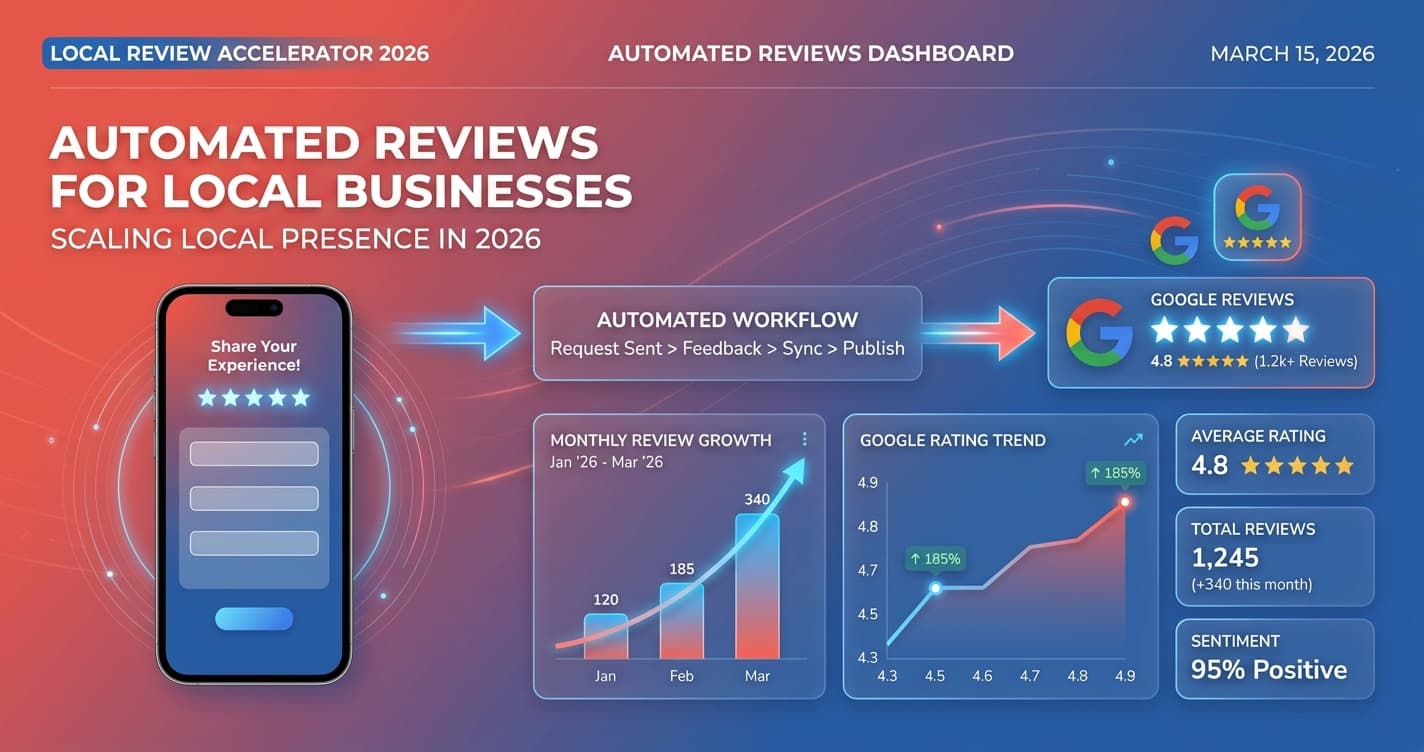
Here's the complete workflow for a dine-in restaurant:
Step 1 — Customer pays. Your POS (Toast, Square, Clover) captures their phone number or email from the receipt, loyalty program, or reservation record.
Step 2 — Trigger fires automatically. Forty-five minutes after the transaction closes, the system sends a personalized message: "Hi Maria — thanks for dining with us tonight at [Restaurant]! If you have a minute, we'd love to hear how it went."
Step 3 — Customer taps the link. One tap opens their Google Review screen, pre-loaded with your business. They type a sentence and tap post.
Step 4 — Negative feedback routes privately. Customers who indicate a poor experience skip Google entirely and land on your internal feedback form. You get the issue — not a 1-star public post.
Step 5 — Review appears on your listing within 24 hours. Review count rises, rating improves, local search position climbs.
For delivery-only or hybrid restaurants, the same flow works via delivery platform email capture or a post-order SMS. In working with Chicago-area food service clients, Astucia sees automated review request response rates of 28–36% — compared to 2–4% for verbal asks at the table.
Which Review Platforms Should Restaurants Focus On?
Google Business Profile is the primary target. Google reviews directly influence your local pack ranking — the three listings that appear in map results when someone searches "restaurants near me." More reviews plus a higher rating equals a higher position, which equals more foot traffic.
Yelp matters more for restaurants than almost any other industry. Yelp remains a key discovery platform for dining, particularly in urban markets. Route Yelp-specific requests to guests who mention Yelp, or prioritize it for locations in dense metro areas where Yelp still drives meaningful traffic.
TripAdvisor is worth targeting if your restaurant serves tourists, is near a hotel district, or operates in a destination city.
For most independent restaurants and small chains, the priority is: Google first (80% of review automation effort), Yelp second, everything else opportunistically.
What Results Can Restaurants Expect from Review Automation?
Based on patterns across restaurants using consistent automated review outreach:
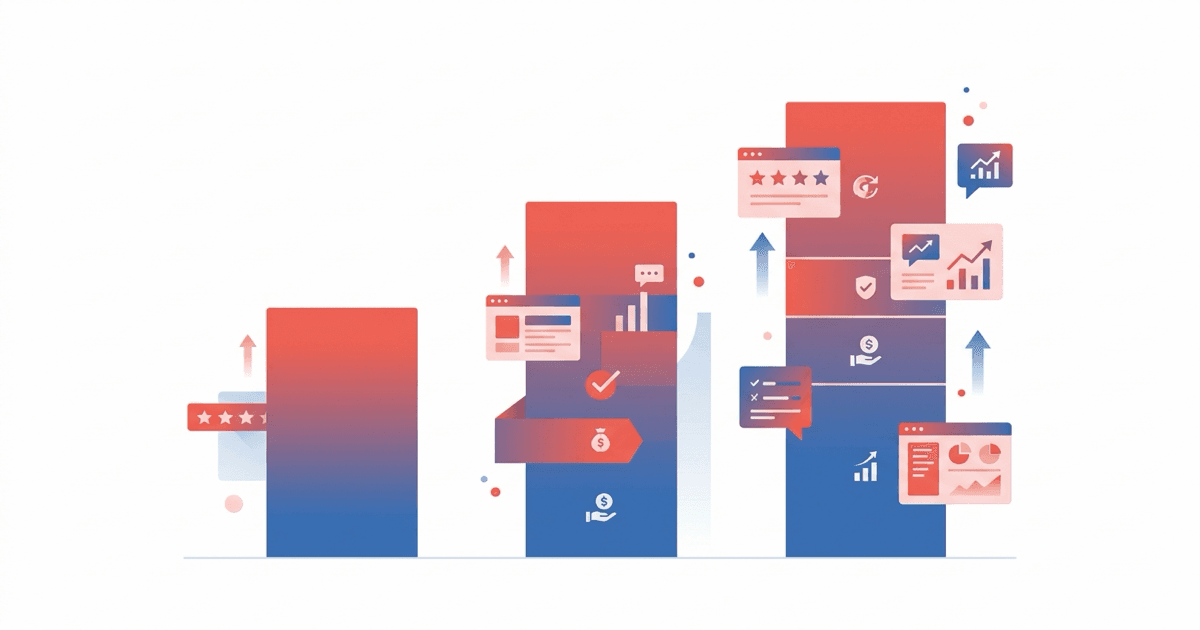
- Review velocity increases 5–8x within the first 30 days. A restaurant averaging 3 reviews per week often reaches 18–24 per week within a month.
- Star rating typically improves by 0.2–0.5 points over 60–90 days as recent positive reviews outpace and dilute older mixed ones.
- Local pack ranking climbs. Restaurants with 200+ reviews receive roughly 54% more calls and direction requests than comparable listings with fewer (Toast Restaurant Industry Report).
- Walk-in traffic increases. Higher local pack position — often from position 7–10 to the top 3 — captures the 74% of local search clicks that go to the first three results.
- 1-star reviews decline. With private routing catching negative experiences, public 1-star posts drop significantly in the first quarter.
The compounding effect matters most. A listing with 200+ recent reviews builds social proof that converts searchers even before they read a single word of your menu. Higher review counts also reduce friction for first-time visitors who are choosing between you and an equally-rated competitor down the street.
How Do You Get Started With Review Automation for Your Restaurant?
Getting started with review automation for restaurants takes less than a week:
1. Connect your customer data source. POS system, reservation platform (OpenTable, Resy), or loyalty app. Most integrations are plug-and-play.
2. Customize your outreach message. Include your restaurant name, a tone that matches your brand (casual, upscale, neighborhood spot), and a direct Google review link.
3. Set your timing. Forty-five to sixty minutes post-visit is ideal for dine-in. For delivery, two hours after estimated delivery time performs best.
4. Enable private feedback routing. This single step prevents most avoidable 1-star reviews before they post publicly.
5. Monitor and respond. Replying to reviews — positive and negative — signals to Google that your business is active and engaged, which provides an additional local ranking boost.
Book a free demo with Astucia to see how review automation integrates with your existing POS and reservation setup.